


304 VS 304L Stainless Steel Grades
Dec 23, 2025
Để lại lời nhắn
Stainless steel is a type of steel that is highly resistant to corrosion due to the presence of chromium in its alloy. There are many types of stainless steel like 304, 316, and 430 that are categorized according to their composition.
But what's the difference between 304 and 304L Stainless Steel? What is the steel grading system and what are their properties?
Learn about 304 and 304L stainless steel and when to use these grades of stainless steel.
304 Stainless Steel Grade
SAE 304 stainless steel is the most widely used stainless steel grade. Type 304 stainless steel is made of iron, carbon, chromium, and nickel. The chromium and nickel add to the corrosion resistance and the carbon adds to the strength of the steel.
Type 304 Stainless steel is also called 18/8 stainless steel because of its composition consisting of 18% chromium and 8% nickel.


Type 304L Stainless Steel
Stainless steel 304L has similar properties and composition to type 304. The 'L' in type 304L stainless steel stands for 'low'. With the same basic makeup, it has a lower percentage composition of carbon.
304L stainless steel has lower carbon content and the maximum limit for carbon is 0.03% vs 304 stainless steel that has a maximum limit of 0.08%.


Property Comparison of 304 and 304L Stainless Steel
Material properties of 304 stainless steel offer a higher tensile strength. The difference is approximately 5- 40 MPa due to the higher carbon content, but in all practical applications, both steel perform similarly.
Both 304L and 304 offer good corrosion resistance due to the identical chromium and nickel content. However, the 304L's lower carbon content reduces carbide precipitation which leads to chromium depletion and further leads to intergranular corrosion. 304L can be used without needing heat treatment post-welding because it retains its corrosion resistance near welds. 304L has higher intergranular corrosion resistance.
304 stainless steel has good weldability and can be welded using standard TIG or MIG welding techniques. Since type 304 has higher carbon in its chemical composition, this can lead to carbide precipitation at high temperatures (above 500℃).
304 requires post-weld annealing which can add to the overall costs. Without annealing, 304 welds are not suitable for corrosive environments.
304L has better weldability than type 304 because it has lower carbon content which reduces carbide formation retaining corrosion resistance near welds.
Other key differences between the two steel type can be seen in their hardness. 304L typically has a lower hardness than 304 due to the higher carbon in type 304. The typical value is around 160 HB.
The hardness changes based on processes like cold-working and heat treatment. The difference in hardness of steel lies in the carbon content. Lower carbon in 304L reduces its ability to form a relatively rigid structure.
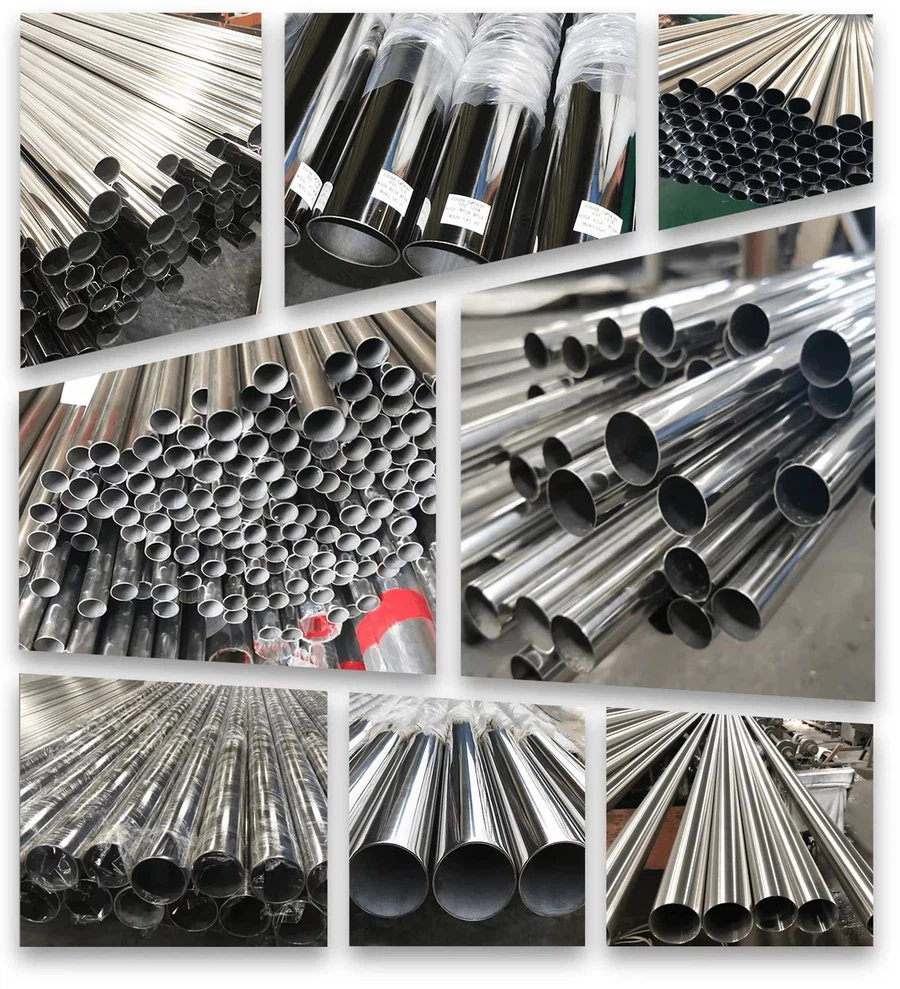
Composition Comparison of 304 VS 304L Stainless Steel

Application Difference Between 304 and 304L Stainless Steel
304 Stainless Steel Applications
Food processing equipment: 304 is primarily used in food-safe containers and kitchen utensils and countertops. It is used in storage containers and conveyors. Architectural: 304 is a durable metal and is used in claddings, building facades, and decorative panels. Chemical plants and pharmaceutical industry: 304 is one of the most widely used in piping and tanks to handle corrosive materials. It is corrosion-resistant and highly resistant to chemicals.
Surgical Instruments: 304 is suitable for applications in the medical industry, especially surgical tools because it can resist chemicals and go through sterilization processes.
304L Stainless Steel Applications
304L is widely used in applications across chemical processing plants, marine applications and applications that require welding and resistance to corrosion.
Pressure vessels: 304L has excellent weldability and pressure vessel manufacturing requires welding panels and sheets without compromising chemical resistance. While it would be structurally weaker than standard 304 (marginally), the weldability compensates for this specific use.
High-temperature applications: type 304L is also used in applications where post-weld annealing is not practical. It is worth noting, it has lower tensile and yield strength.
What is the difference between 304 and 304L?
304 or 304l are two alloys of stainless steel with the main difference being the maximum allowable carbon content. 304 stainless steel has 0.08% carbon while 304L has a lower 0.03% carbon.
Is 304L more expensive than 304?
The price of 304L is $2.85 / Kg which is more expensive than 304
What does the L stand for in 304L?
The L in type 304L stands for "lower", referring to the lower carbon percentage in its chemical composition.
Which is better 304L or 316?
Type 316 has superior corrosion resistance and strength. Type 316L has superior weldability compared to 304L.
We provide a comprehensive range of stainless steel grades, including the widely used 304 and 316 series, as well as specialized grades such as 430, 201, duplex, and super austenitic steels, tailored to meet diverse industrial and environmental requirements. Whether you need corrosion-resistant solutions for marine applications, food-grade compliance, high-temperature durability, or custom specifications, our expert team is ready to assist.
Each batch of exported stainless steel products adheres to the most stringent testing standards: from spectral analysis of raw materials to ensure precise composition, to surface polishing precision inspection for mirror-like smoothness; from salt spray testing to verify corrosion resistance lifespan, to physical performance testing that guarantees strength and toughness. We possess a complete laboratory testing system and third-party authoritative certifications, ensuring every product not only complies with international ASTM, JIS, and EN standards but also delivers a "zero-defect" commitment, providing you with complete peace of mind throughout your procurement process.

Our factory is equipped with advanced automated production lines and CNC processing equipment. Every step-from precision slitting and laser cutting to surface polishing and forming welding-follows strict production processes and international standards. An experienced technical team and a rigorous quality control system are integrated throughout, ensuring full traceability from raw materials to finished products and consistent quality stability. We not only possess large-scale production capabilities but also offer flexible customization, transforming durable stainless steel through exquisite craftsmanship into reliable products that meet the demands of global customers.

Gửi yêu cầu